
When most people think of cabin crew, they often imagine friendly professionals offering snacks, smiling politely, and helping with luggage. While that’s certainly part of the job, the true role of a cabin crew member is far more serious and crucial — especially when it comes to emergency exits and safety procedures.
Whether you're starting your journey through a Cabin Crew and Air Hostess Training in Kolkata or preparing to enroll in the Best Cabin Crew Course in Thane, understanding emergency protocols is not just a skill — it’s a lifesaving responsibility.
In this article, we’ll explore why it is absolutely essential for every cabin crew member to know about emergency exits, how this knowledge is taught in professional institutes across India, and how it shapes your career in aviation.
Why Emergency Exit Knowledge Is a Must for Cabin Crew
The main job of cabin crew is passenger safety, not just service. In the event of a fire, crash landing, water landing, or sudden evacuation, crew members are responsible for guiding hundreds of passengers to safety within seconds.
And during such emergencies, every second counts. Knowing how to operate emergency exits, when to open them, when not to, and how to lead passengers through them could be the difference between life and death.
Emergency exit training includes:
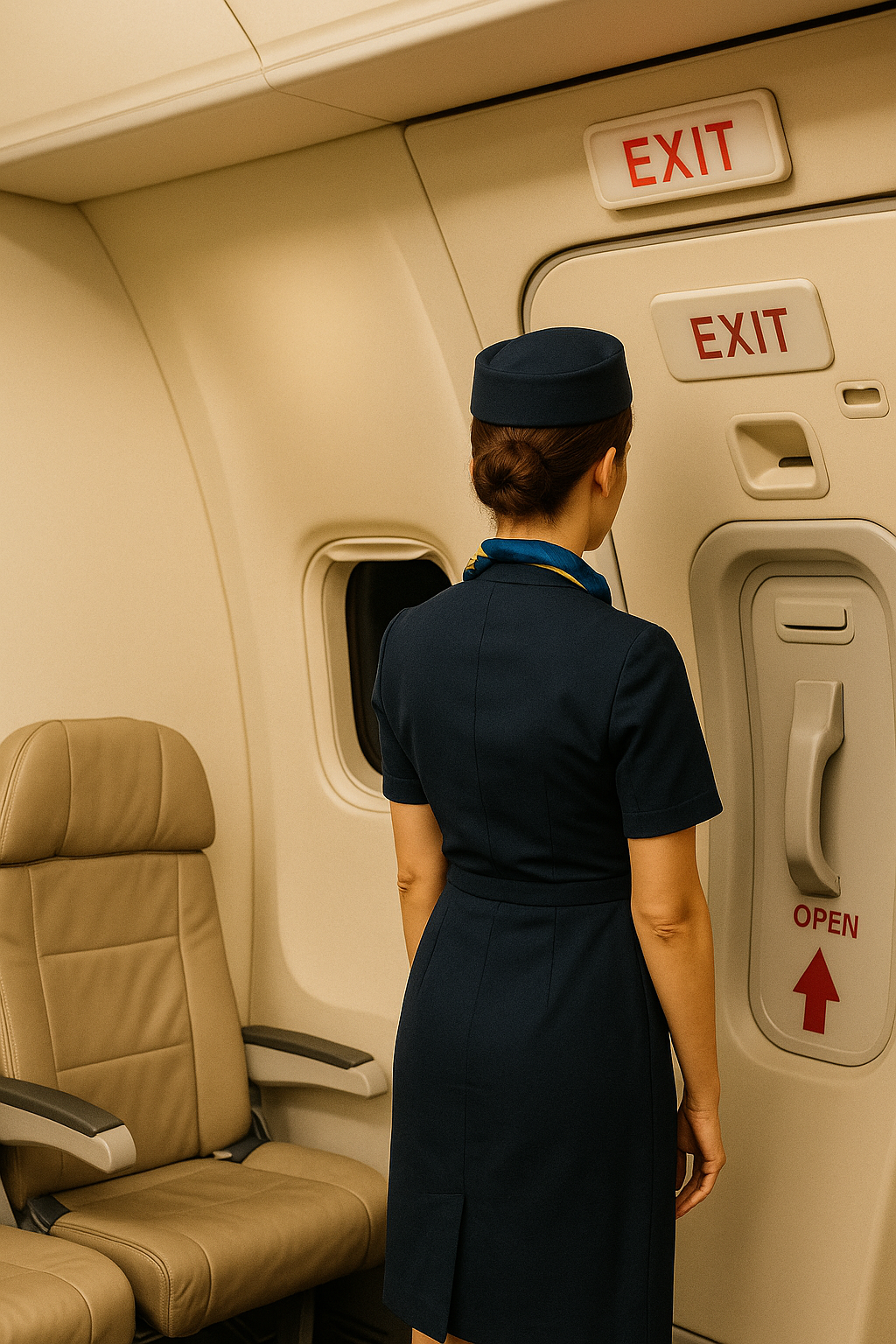
Identifying and locating all exits
Knowing which exit to use based on the situation
Operating emergency doors and escape slides
Managing panic and crowd control
Helping passengers with special needs or children
That’s why emergency training is a core part of the curriculum at every reputed Aviation Training Institute in Ghatkopar, Best Cabin Crew Course in Indore, and other professional institutes across India.

Real-Life Incidents That Prove Its Importance
There have been many real-life incidents where cabin crew actions saved lives. In most of these cases, passengers were able to evacuate quickly and safely because the crew knew exactly what to do and how to manage the emergency exits.
Here are just a few examples:
The Emirates Flight 521 (2016): The cabin crew managed to evacuate all passengers in under 90 seconds, even though the plane had caught fire on the runway.
British Airways Flight 2276 (2015): A fire broke out during takeoff. Crew members guided all passengers through emergency exits without panic or injury.
These examples highlight how vital it is for cabin crew to be fully trained in emergency procedures, not just basic customer service.
What Is Taught in Emergency Exit Training?
When you enroll in a professional course like the Best Cabin Crew Course in Guwahati or best cabin crew academy in Ahmedabad, you’ll go through detailed modules on emergency protocols, which include:
1. Types of Emergency Exits
You’ll learn about various exit types — door exits, window exits, over-wing exits — and how each one works on different aircraft types.
2. When to Use and Not Use Exits
In situations like fire, ditching (water landing), or blocked passageways, you’ll be trained to assess and choose the safest exit for evacuation.
3. Opening Procedures
You’ll be taught the step-by-step procedures to open emergency doors and deploy slides. Practice makes perfect here — and that’s why training includes hands-on simulations.
4. Evacuation Commands and Communication
You’ll learn specific phrases to give clear instructions to passengers, such as:
"Open seat belts!"
"Leave everything behind!"
"Come this way!"
"Jump and slide!"
This helps guide people during panic-filled moments when clarity is most needed.
5. Handling Different Scenarios
From hijackings to crash landings, you’ll be prepared to stay calm, make fast decisions, and lead others confidently.
These are not things you can learn just by reading. You need professional guidance — and that’s what you’ll get when you choose a top-tier institute like the best cabin crew academy in Delhi or any other city mentioned.
How Training Institutes Prepare You for Real Emergencies
Institutes like those offering Cabin Crew and Air Hostess Training in Kolkata, or the Best Cabin Crew Course in Thane, follow international training standards that prepare you for real-life airline operations.
Here’s what your training might include:
Mock aircraft drills: Realistic practice on aircraft models
Emergency slide deployment: Learn to use inflatable slides
Fire and smoke training: Handle smoke-filled cabin situations
Water survival techniques: Learn ditching procedures and life jacket use
CPR and First Aid: Save lives before help arrives
Passenger psychology: Learn how to handle panic and fear
These modules are a big part of the curriculum in every trusted Aviation Training Institute in Ghatkopar, and similar locations like Ahmedabad, Guwahati, and Indore.
Why Students Must Take This Seriously
Many students entering the field through the Best Cabin Crew Course in Indore or Best Cabin Crew Course in Guwahati are attracted to the glamour of the job. But the real respect in this profession comes from how cabin crew members save lives and handle emergencies.
That’s why, as a student, you must treat safety training — especially emergency exit knowledge — with full focus and seriousness.
This training doesn’t just prepare you for interviews. It prepares you for real emergencies on real flights.

Airline Expectations and Interview Questions
Almost all major airlines will ask you questions during interviews like:
"What would you do if a passenger tries to open an exit during the flight?"
"How do you handle an emergency evacuation?"
"Do you know how to operate an over-wing exit?"
Your knowledge and confidence will show whether you’re ready to take charge or panic under pressure. If you’ve trained at the Best Cabin Crew Course in Thane or any top aviation institute, you’ll be more than prepared.
Career Growth and Confidence
Knowing emergency procedures, especially exit operations, adds to your professional value. It boosts your confidence, and airlines notice that. It can also help you grow faster in your career, taking on roles like:
Lead Cabin Crew
In-flight Safety Officer
Airline Trainer
So when you study at the best cabin crew academy in Delhi or any top-tier institute, you’re not just learning rules — you’re building a strong foundation for long-term success.
Final Thoughts: Knowledge Saves Lives
To answer the question — Yes, every cabin crew member must know about emergency exits. It’s not optional — it’s essential.
Airlines trust their crew with the lives of passengers. That’s why, from day one, your training at places like Cabin Crew and Air Hostess Training in Kolkata, Best Cabin Crew Course in Guwahati, or the Best Cabin Crew Course in Thane will focus on building your safety knowledge, confidence, and quick decision-making skills.
Are You Ready to Lead in the Sky?
If you’re dreaming of a successful aviation career, don’t just focus on uniforms and travel. Focus on skills that truly matter — like emergency exit handling.
Choose the best cabin crew academy in Ahmedabad, or a reputed Aviation Training Institute in Ghatkopar, and get the training that prepares you not just for a job — but to be a leader in the sky.








Write a comment ...